Dera Ismail Khan, KP – January 3, 2026
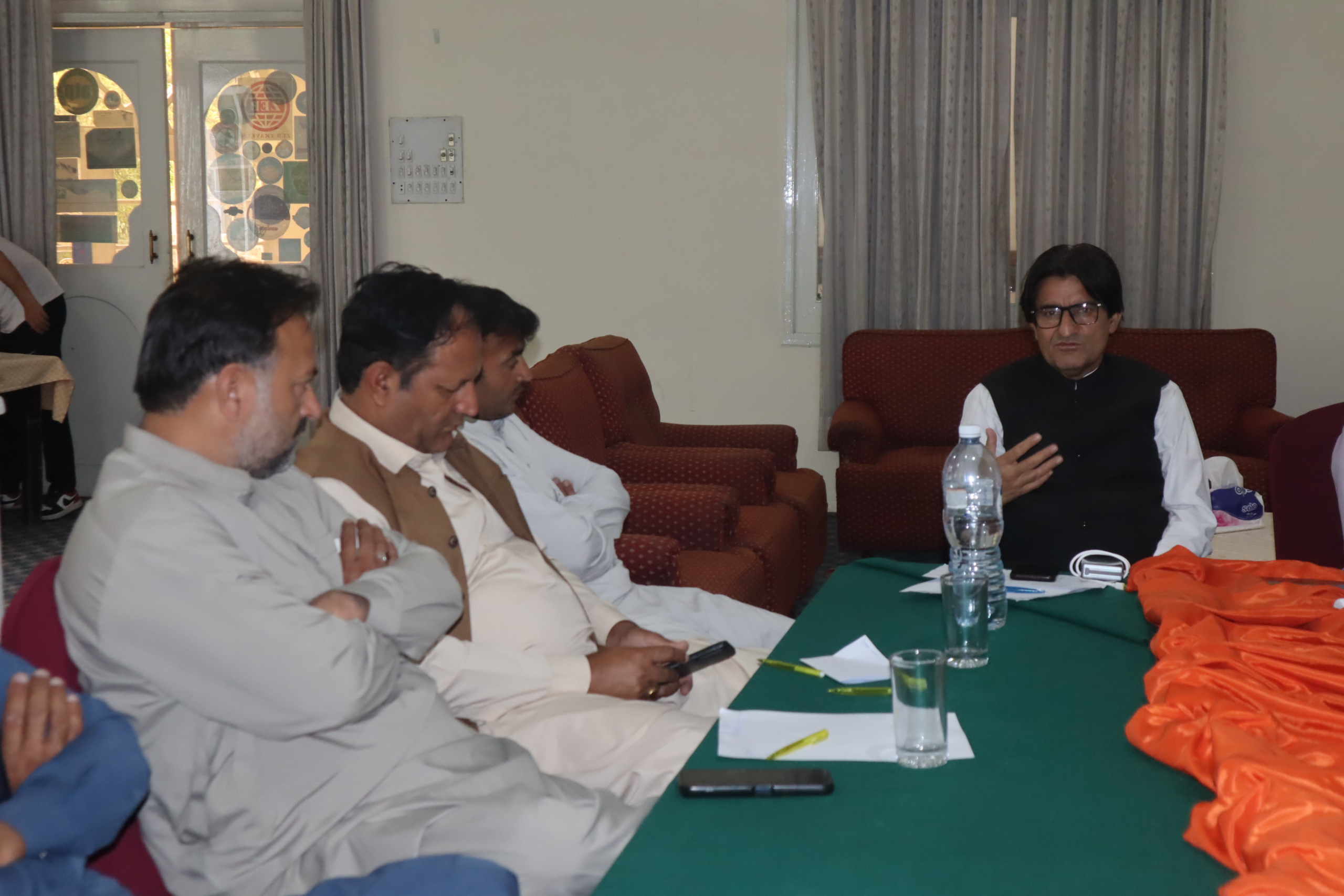
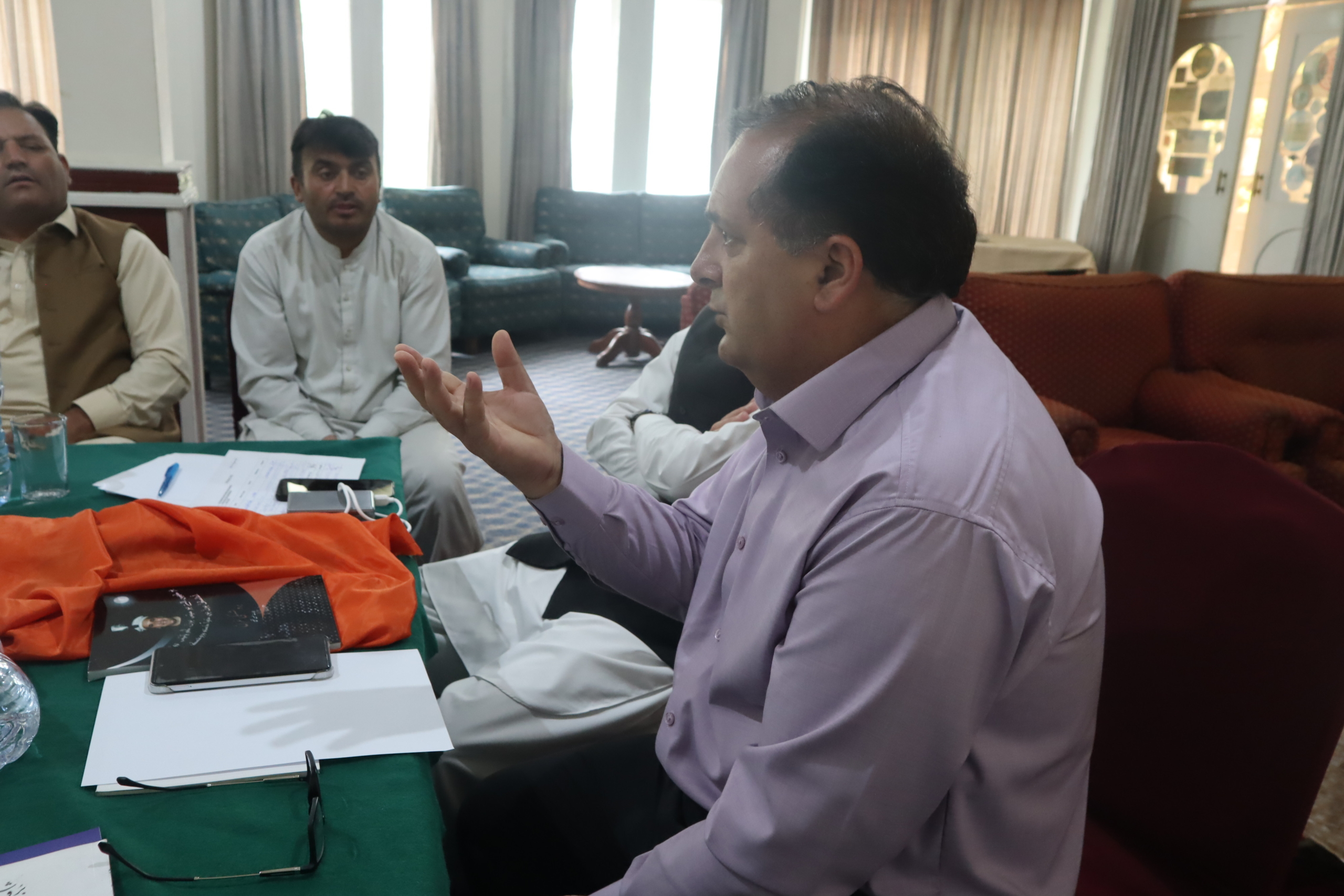
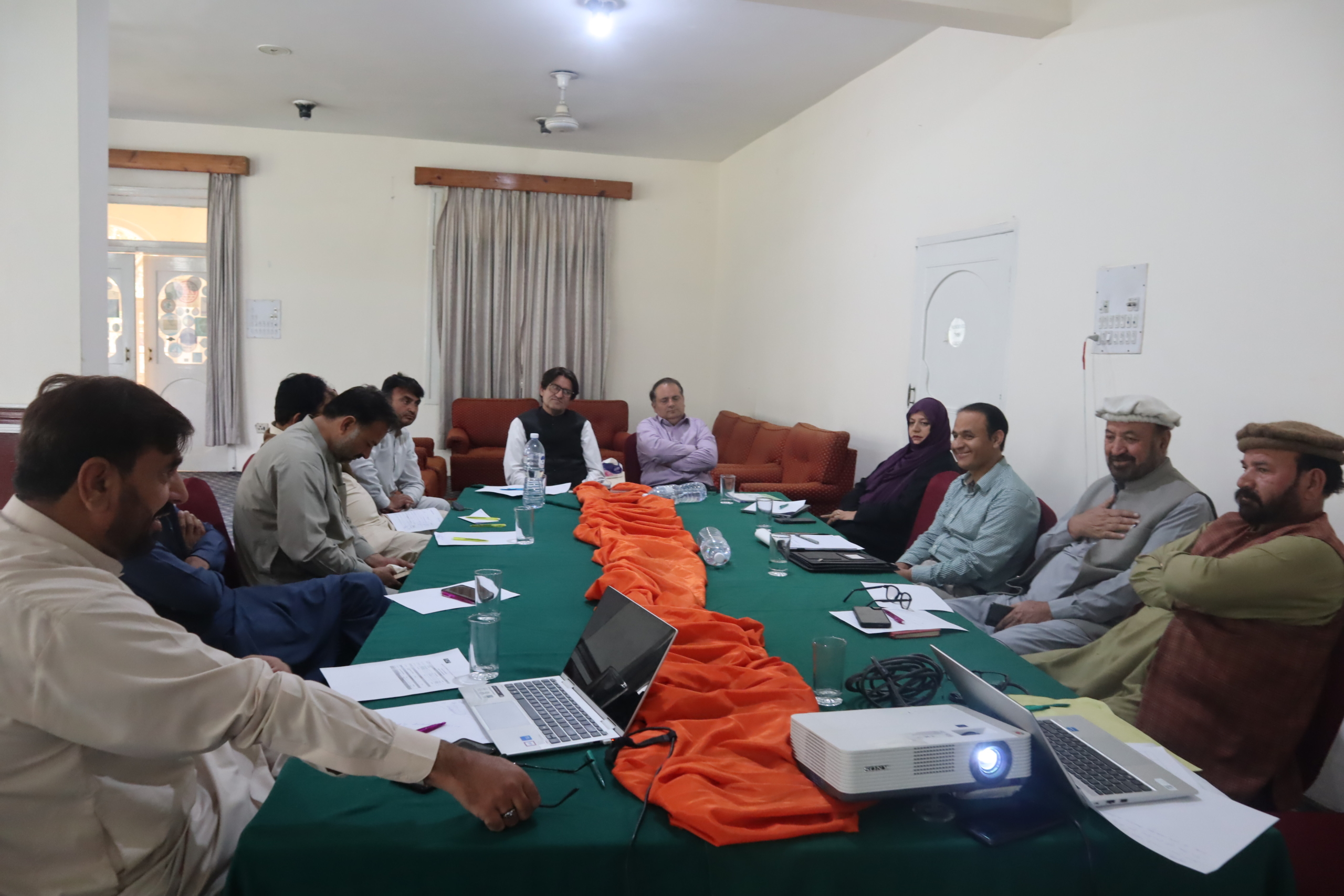
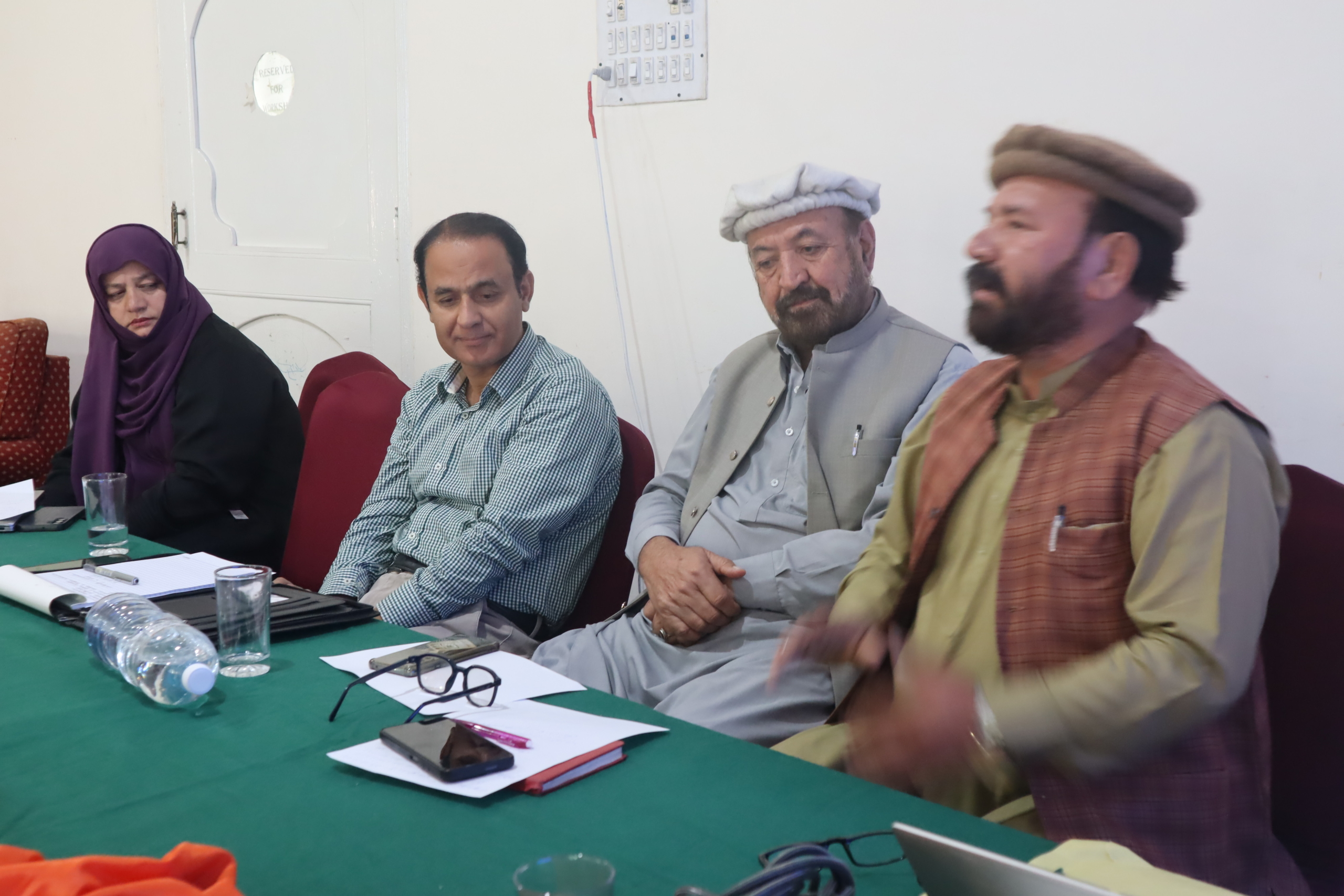
The Forum for Language Initiatives (FLI) today signed a Memorandum of Understanding (MoU) with Burki Welfare Association (BWA), a community-based partner organization, to promote the poetry of the Ormuri language.

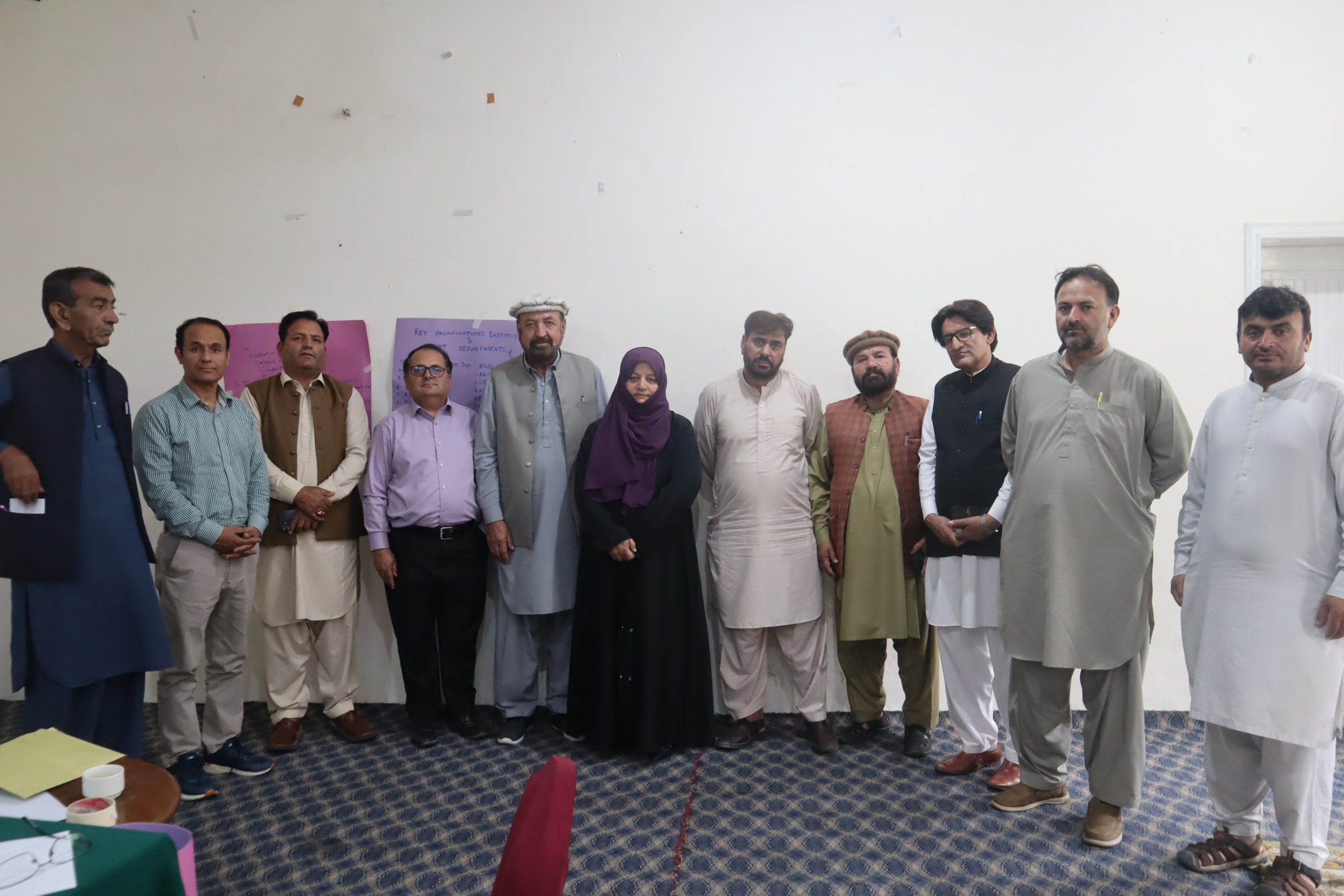
The MoU was signed by FLI’s Executive Director, Fakhruddin Akhunzada, while Arif Zaman Burki, President of BWA, represented the Ormuri language community. The ceremony was attended by members of BWA and the FLI team.

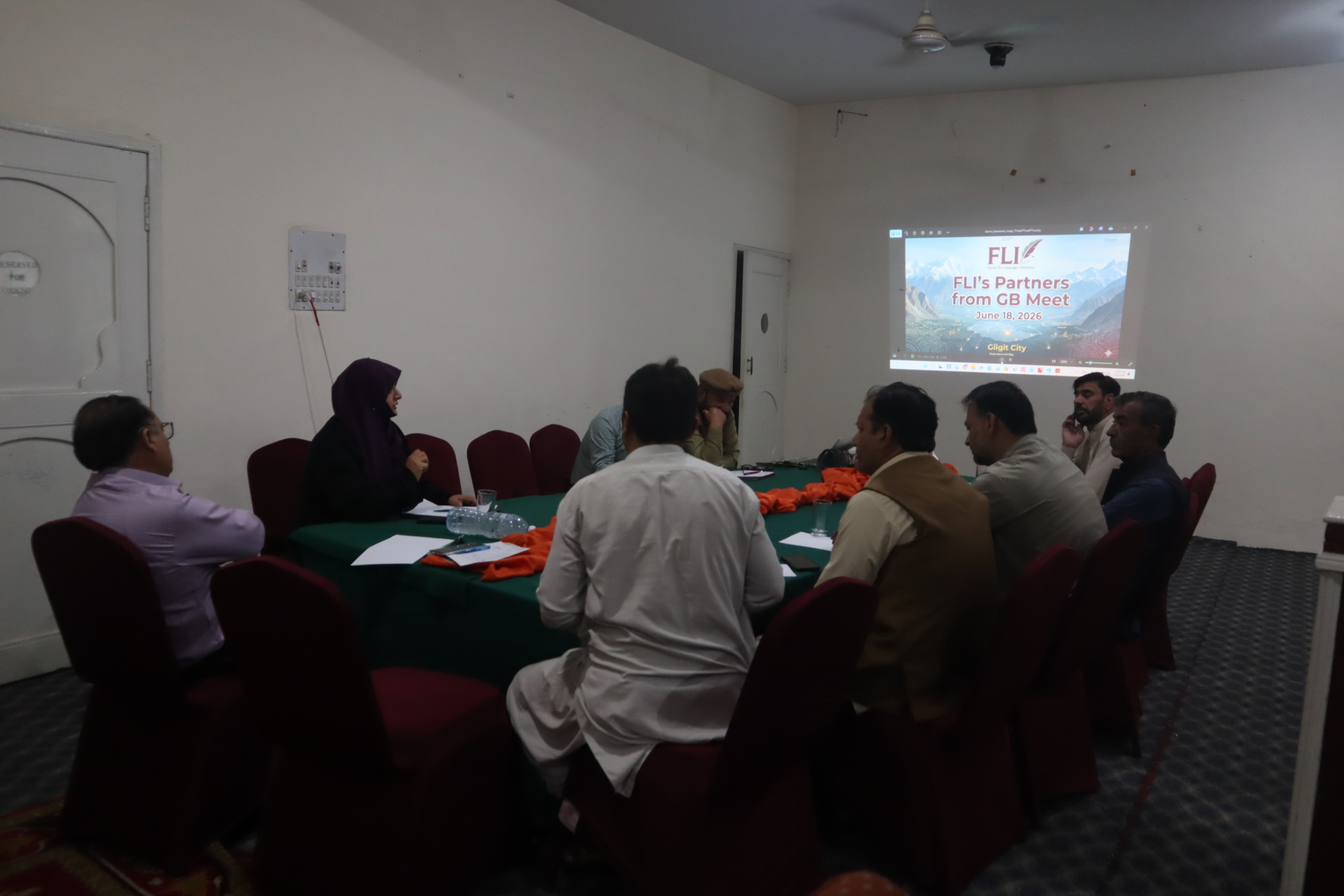
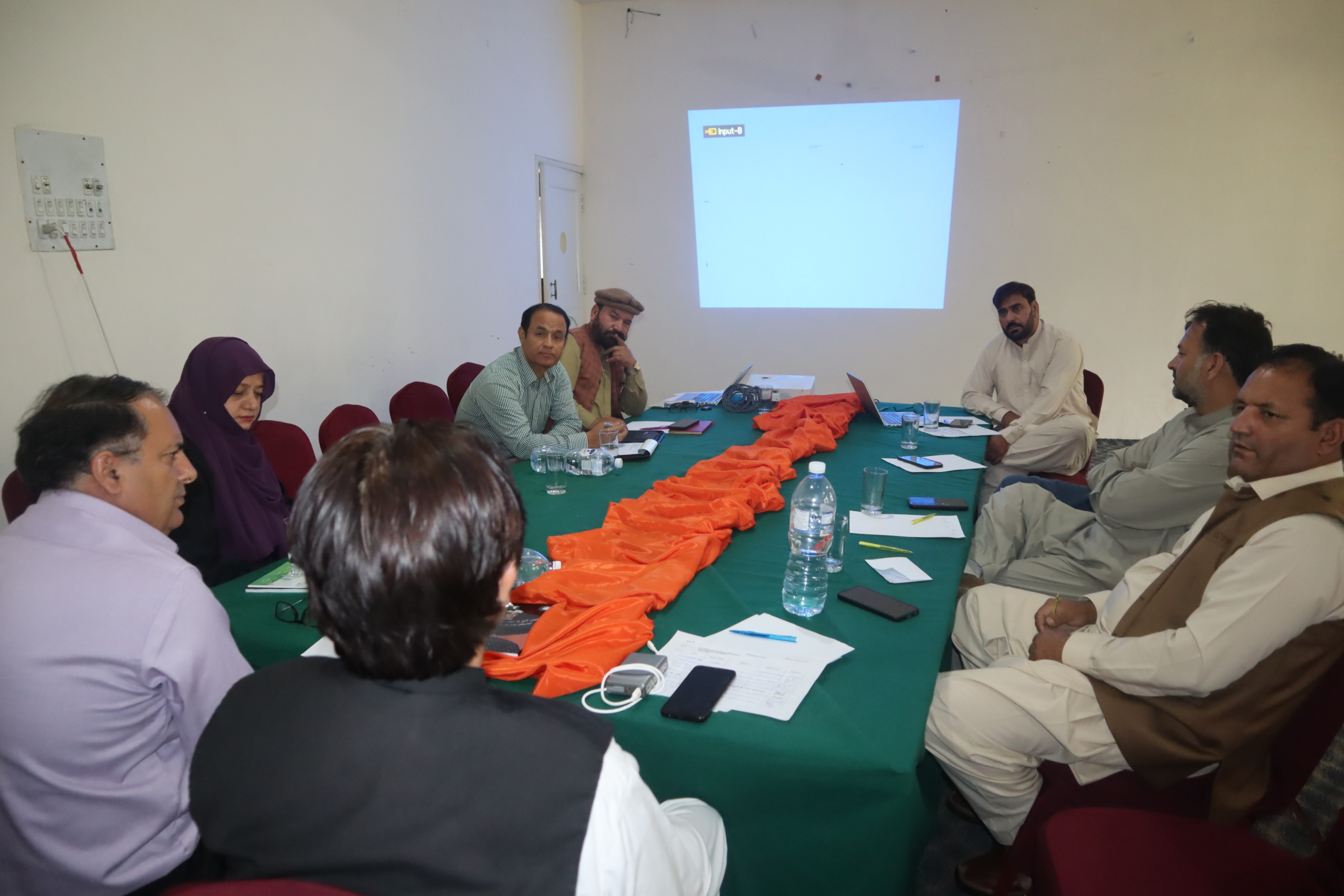
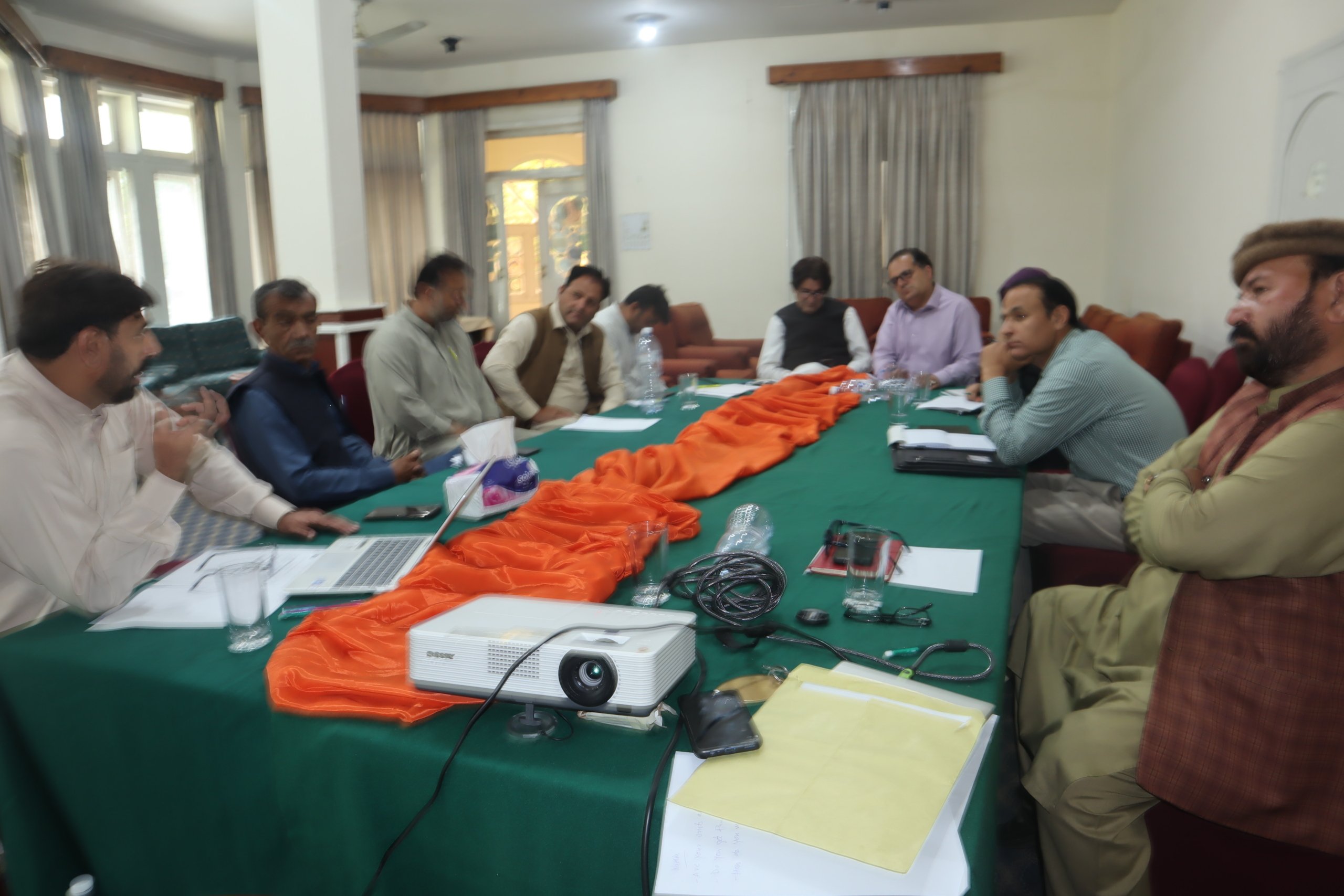
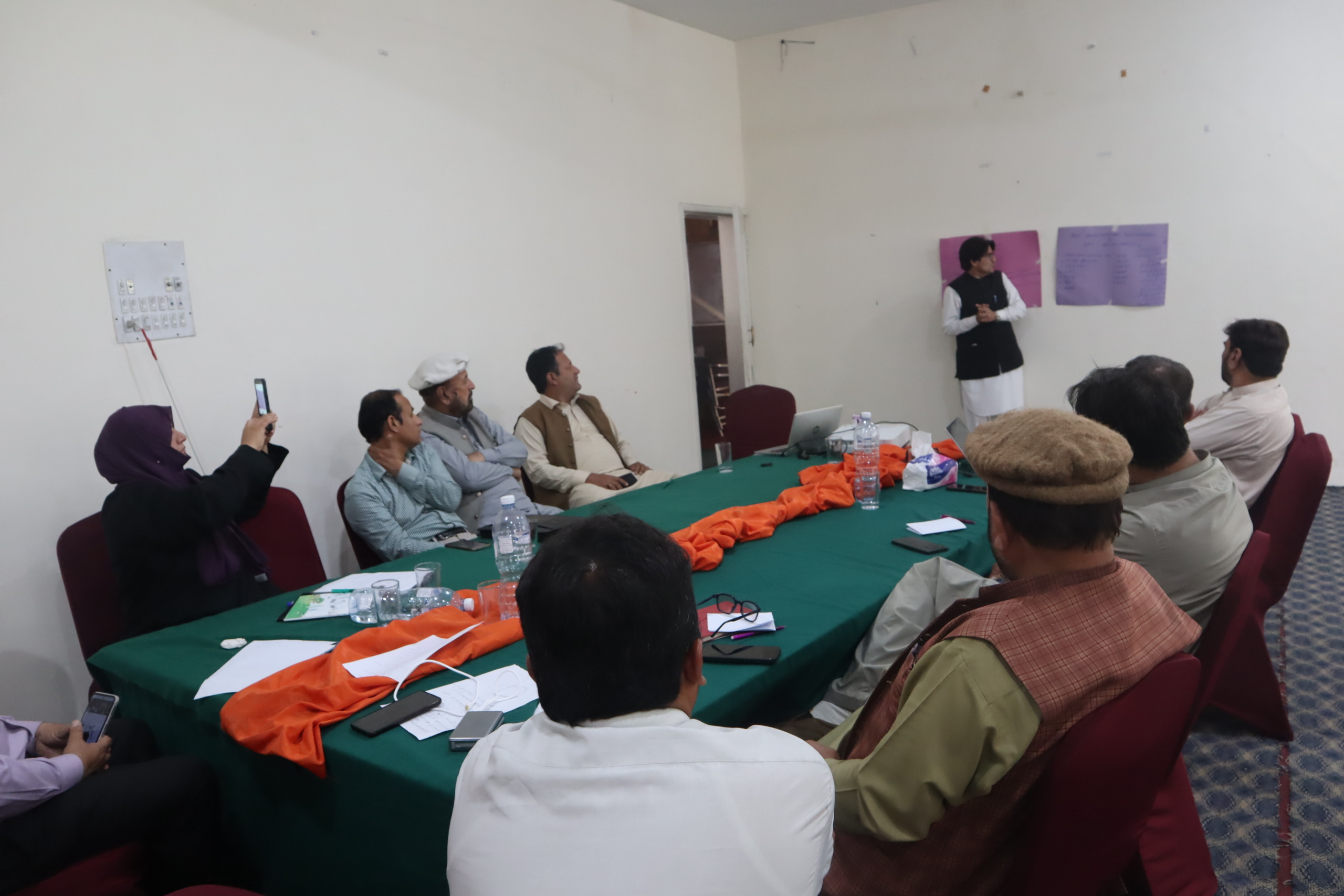
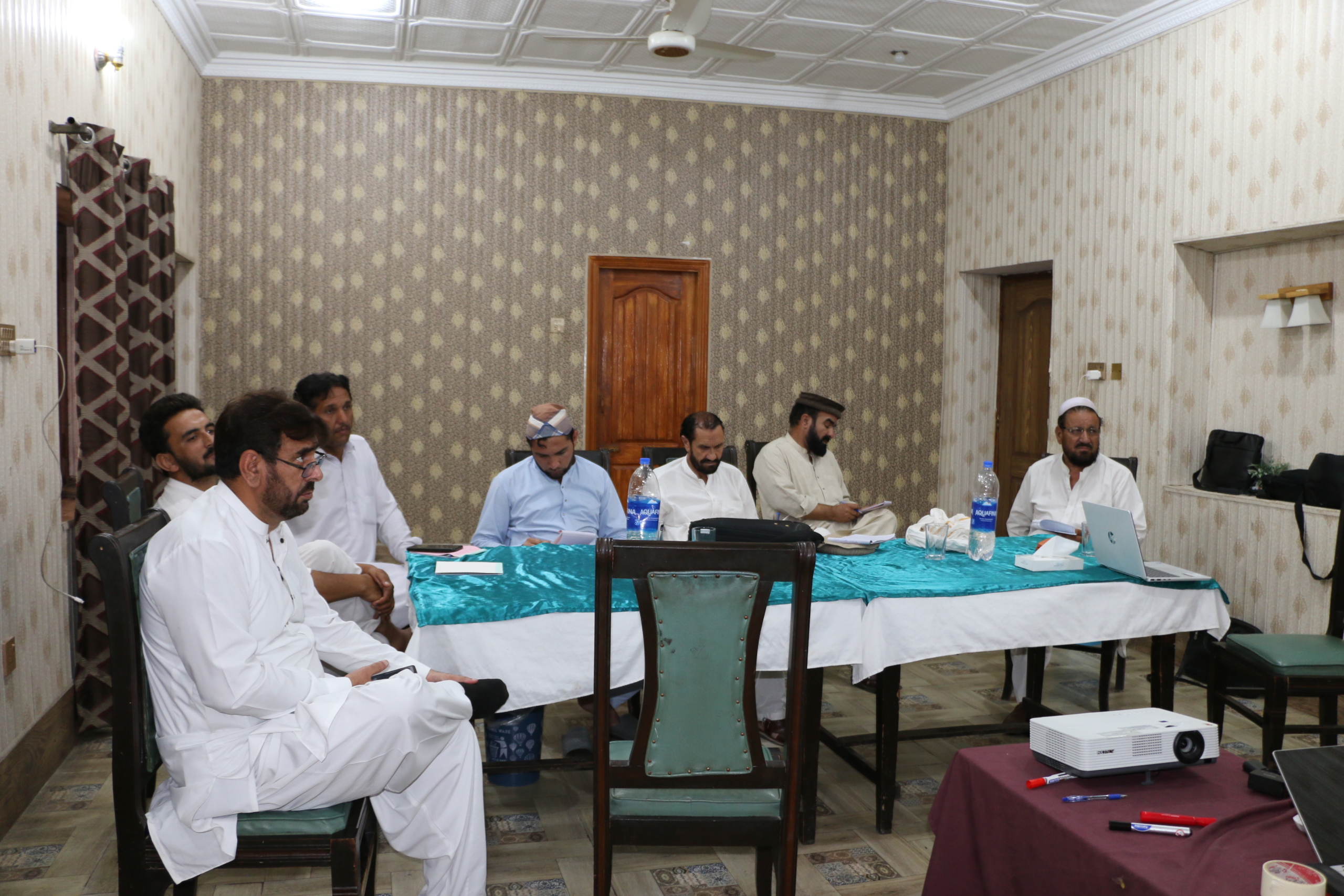
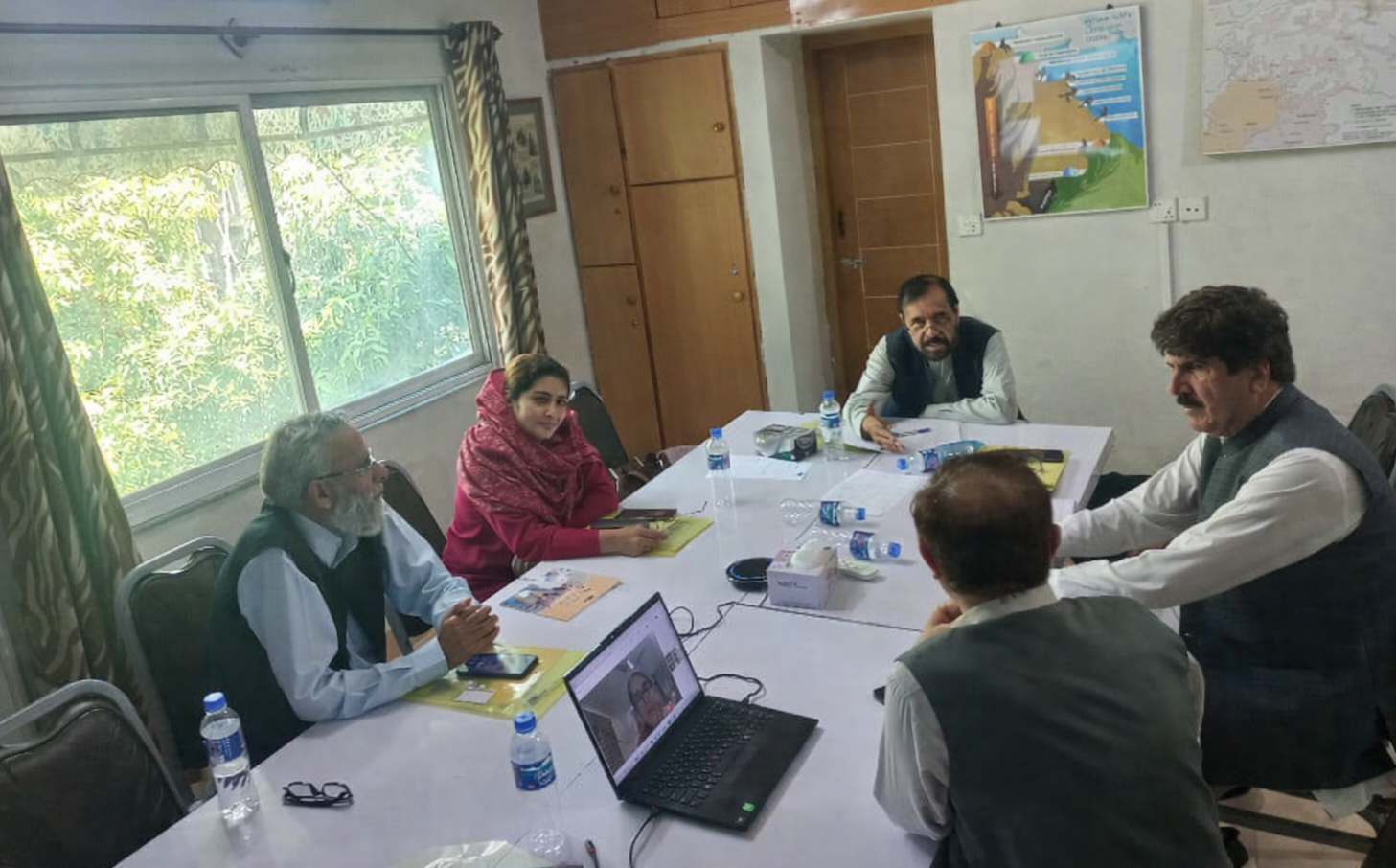
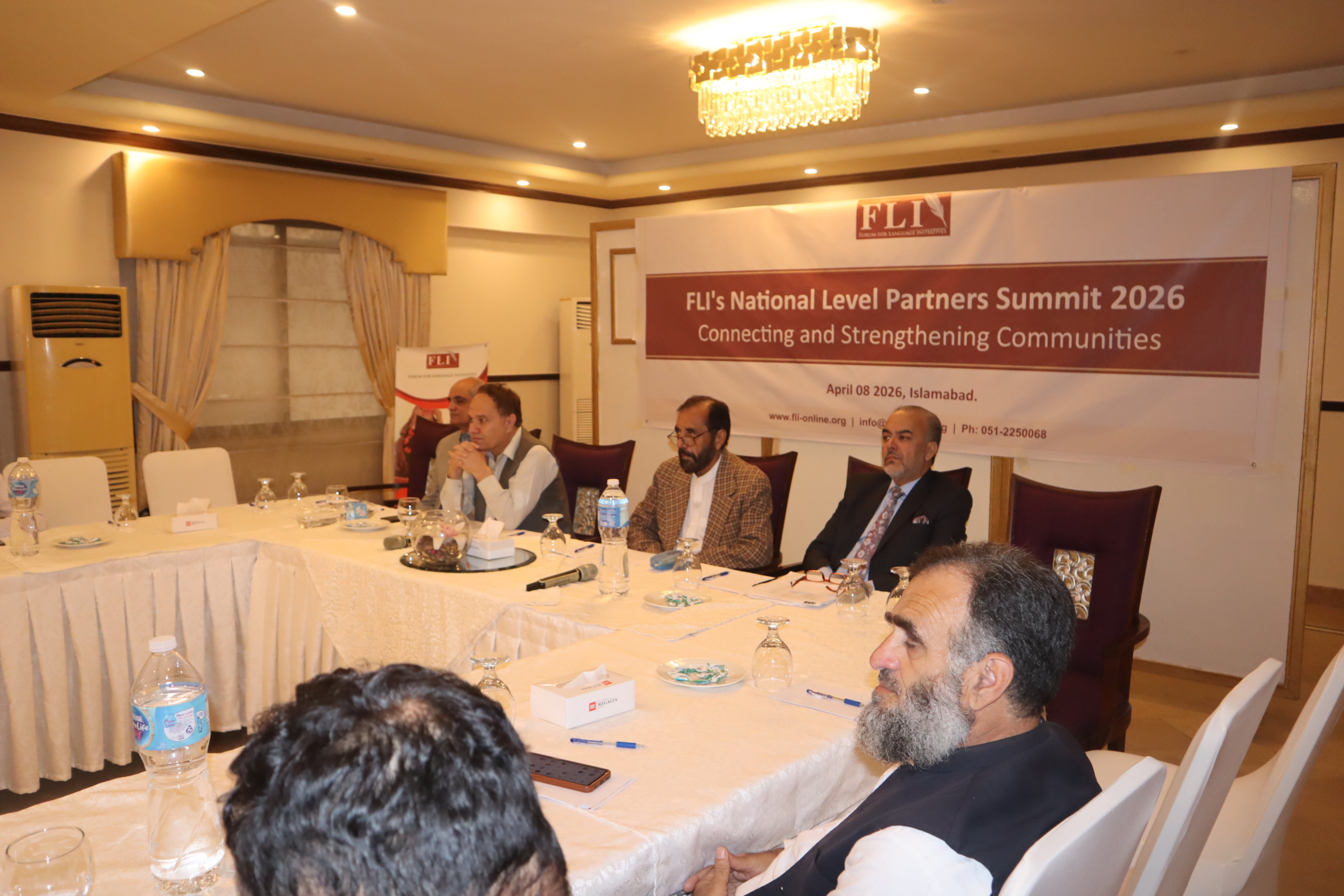
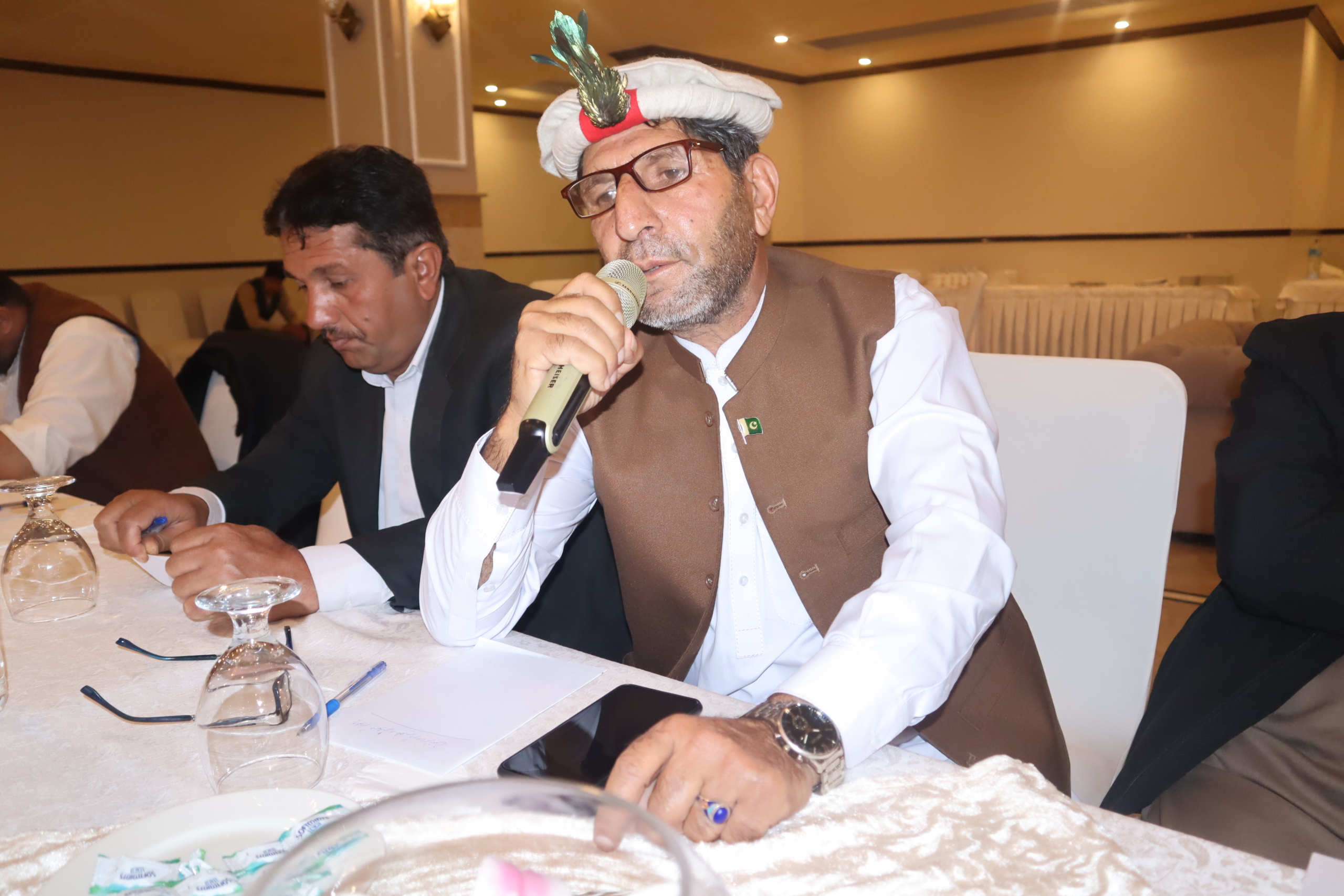
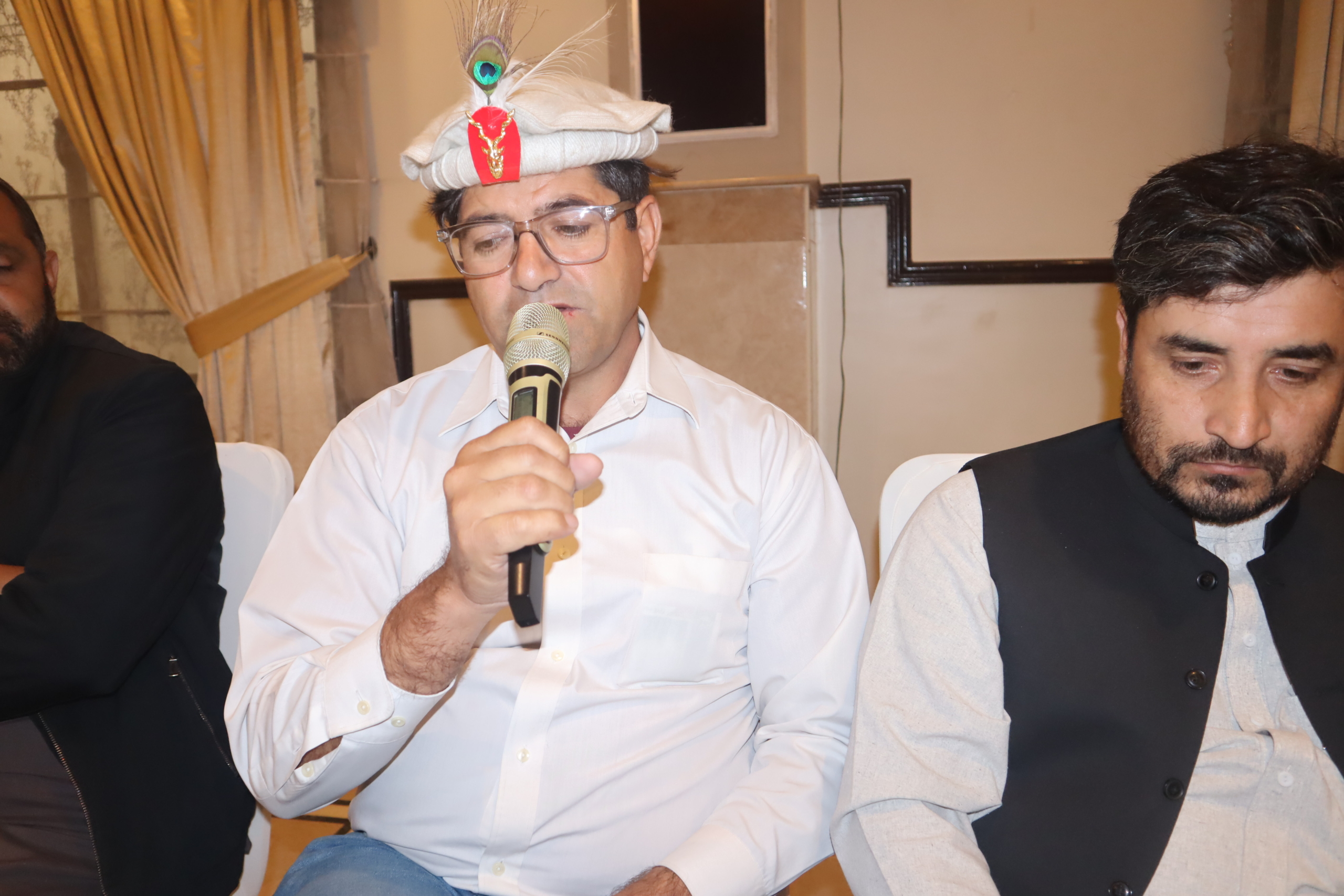
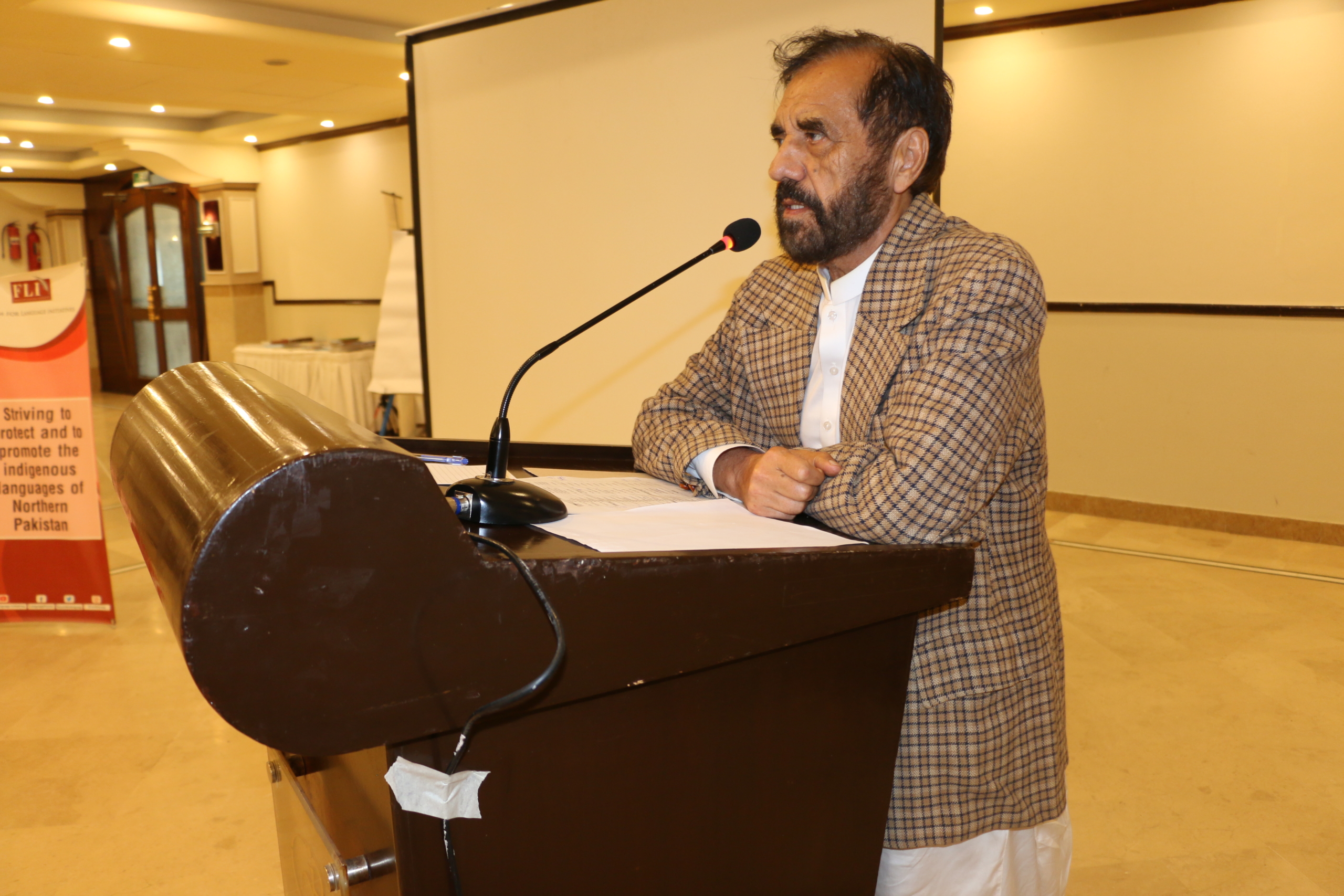
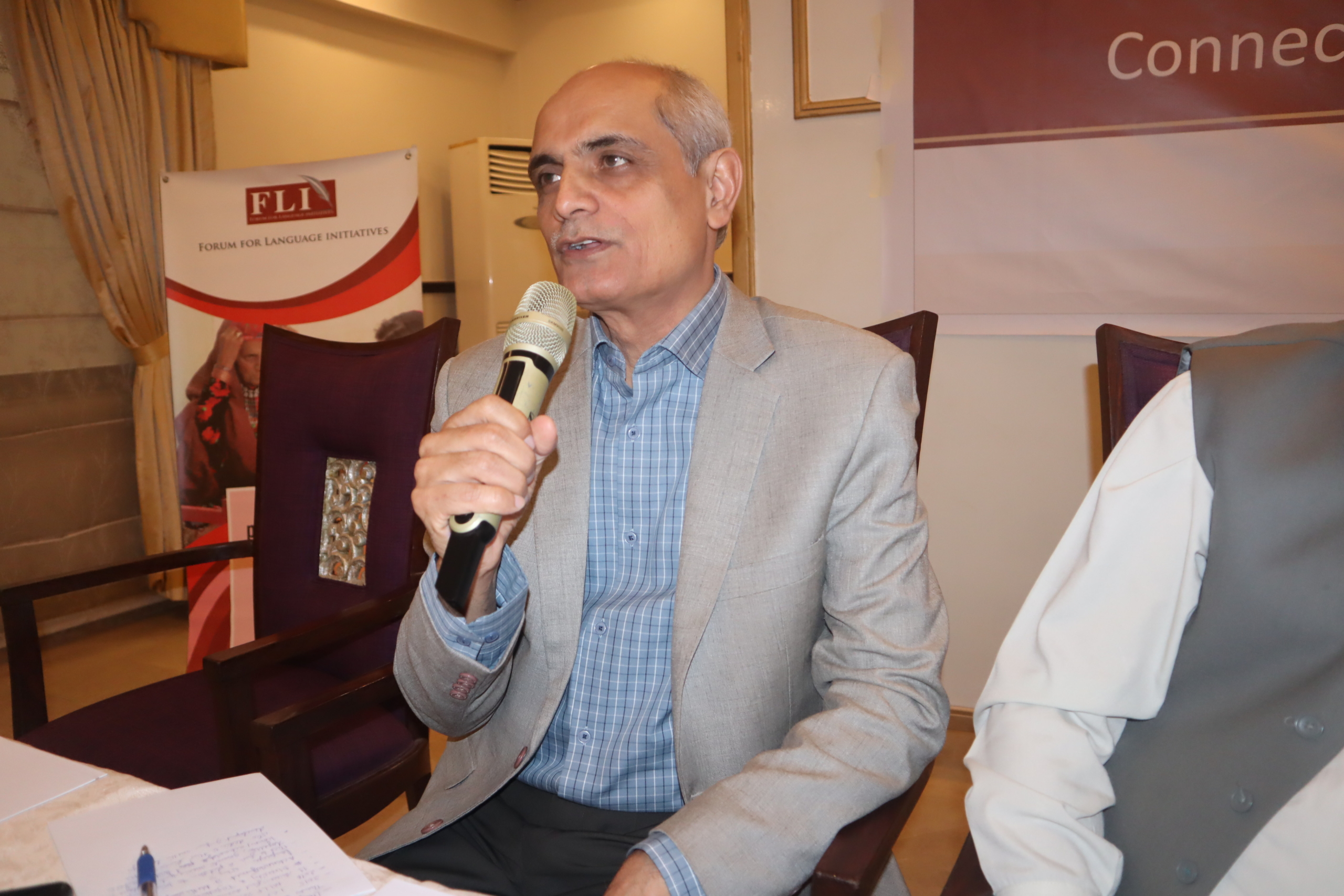
Earlier in the day, a preparatory meeting was held at a local hotel where 17 members of the Ormuri language community, all affiliated with BWA, participated. Ormuri poet Rozi Khan welcomed the FLI delegation, led by its Executive Director. Program Manager Naseem Haider outlined the objectives of the one-year project, while Mr. Akhunzada shared FLI’s targets and future ambitions.

During the session, Rozi Khan Burki introduced participants to the Ormuri alphabets. The project aims to capacitate Ormuri poets to write and read in their language, record their poetry digitally, and publish their creative works—marking a significant step toward preserving and promoting Ormuri literary heritage.

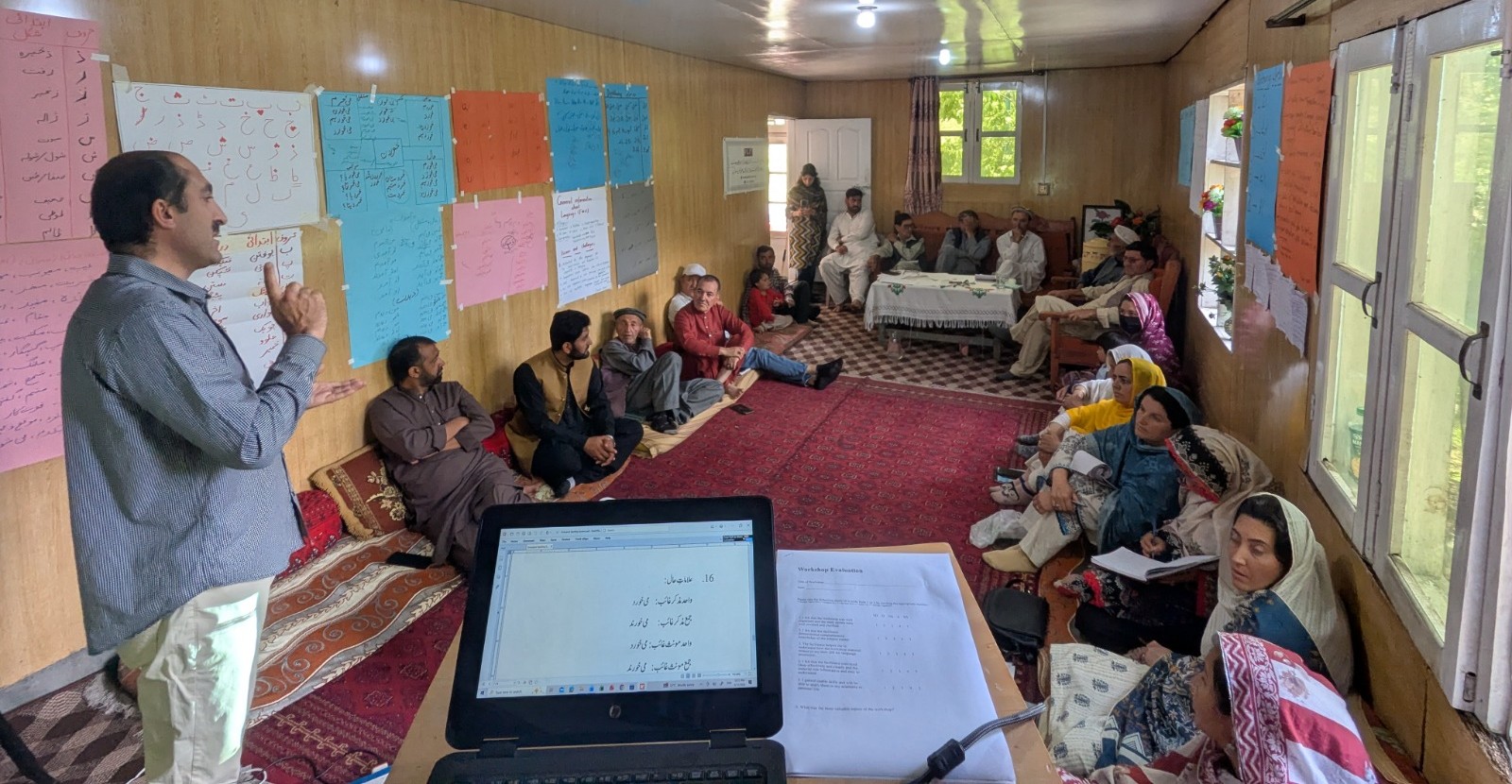
Muzaffarabad, AJK — The Forum for Language Initiatives (FLI) organized a Capacity Building Workshop for Gojri Language Curriculum Developers and Reviewers from December 29, 2025 to January 2, 2026. The event brought together 15 Gojri reviewers, including teachers, linguists, and educationists, to strengthen curriculum development in light of the recent inclusion of Gojri in the educational framework of Azad Jammu & Kashmir.

Gojri, spoken widely across northern Khyber Pakhtunkhwa, Kashmir, and adjoining regions, has long been in written use. However, experts emphasized that further work is needed to standardize its orthography. Participants suggested that in future phases, representatives from Swat, Dir, Shangla, and Buner should also be included to broaden the scope of engagement.

This initiative marks a significant step toward preserving and promoting Gojri language and culture, ensuring its dignified representation in education and literature.

Peshawar, Dec 30 – The Anjuman Taraqqi Damiyan Basha in collaboration with the Forum for Language Initiatives (FLI) organized a seminar dedicated to the Dameli language and culture. The highlight of the program was the launch of Push Bati (Bouquet of Flowers), a poetry collection by renowned Dameli poet Muhammad Akram Khaksar, published by FLI.

The event, held at SS Club Hotel Peshawar, featured scholarly papers, dialogues, and poetry recitations. Mr. Saeed Ahmad Saeed, Secretary PMD, graced the occasion as chief guest, while Mr. Mehrban Elahi Hanfi, President of Anjuman Taraqqi Khowar (Peshawar chapter) and Assistant Director, Public Service Commission, presided over the session. Mr. Fakhruddin Akhunzada, Director of FLI, traveled from Islamabad to attend and enrich the gathering.

A large number of Dameli elders, scholars, and youth residing in Peshawar participated enthusiastically. Chairman ATD, Asmatullah Dameli, expressed gratitude to FLI staff, particularly Director Mr. Fakhruddin Khanzada, for their pivotal role in publishing the book. He emphasized that the current standing of the Dameli language owes much to FLI’s efforts and hoped for continued support.

Speaking at the seminar, the Executive Director of FLI praised Khaksar’s remarkable poetry, noting that Push Bati will play a vital role in promoting Dameli literature, preserving the language, and inspiring the younger generation to engage with Dameli literary traditions.

The program concluded with Dameli poets reciting their verses, adding beauty and depth to the gathering. Members of Anjuman Taraqqi Damiyan Basha thanked all participants for their presence and contributions, which ensured the success of the event.

The Executive Board of FLI held its biannual meeting on November 23, 2025, with all six board members and the Executive Director present. Attendees included Fouzia Qazi, Dr. Farhat Abdullah, Razwal Kohistan, and Fazal Karim. The session was chaired by Mr. Rozi Khan Burki, Chairman of the Executive Board.

The Board reviewed FLI’s performance over the past six months, highlighting achievements, identifying areas for improvement, and addressing current challenges. Updated policies were approved, key Executive Committee decisions endorsed, and the 2026 budget adopted to strengthen operations and impact.

Members also discussed strategies to tackle ongoing challenges, emphasizing collaboration, innovation, and community engagement as essential to advancing FLI’s mission.

Forum for Language Initiatives (FLI) has announced the publication of the first-ever poetry anthology in the Kalkoti language. The book was unveiled yesterday in a ceremony held in Kalkot village, Upper Dir, attended by over 100 participants including poets, educators, elders, youth, and cultural advocates.

Kalkoti, a Dardic language spoken by approximately 15,000 people in the Kalkot area of Upper Dir district of Khyber Pakhtunkhwa province of Pakistan, has long existed primarily in oral form. This anthology marks the first time the community’s poetic expressions—its emotions, landscapes, and traditions—have been captured in written form.

The journey began when local researchers approached FLI with a vision to develop their language. With FLI’s support in training and mentorship, the community established the Kalkoti Community Welfare Organization (KCWO), dedicated to linguistic and cultural development.
Together, they crafted a writing system for Kalkoti and launched a year-long initiative to nurture poetic expression. The newly published anthology is the culmination of this creative and collaborative effort.

FLI congratulates the Kalkoti community on this remarkable achievement and reaffirms its commitment to supporting Pakistan’s indigenous languages.

The Forum for Language Initiatives (FLI) has just rolled out a major upgrade to its Android keyboards, now supporting 15 indigenous languages of northern Pakistan. This milestone marks a significant leap in digital accessibility and linguistic empowerment.

Available Now on Google Play

  • 10 keyboards are already live on the Google Play Store, ready for download.
  • 5 more are currently under review and expected to launch soon.

Key Features at a Glance

  • Android 15 Compatibility: Fully optimized for the latest Android OS, ensuring smooth performance on modern devices.
  • Urdu Support Included: No need for a separate Urdu keyboard — it’s built right in.
  • Lightweight Design: Each keyboard is under 1 MB, making it ideal for low-storage devices.
  • Privacy-First: No ads, no access to your gallery, contacts, or location. Once installed, it runs offline — no permissions required.

A Tool for Cultural Expression

FLI is proud to offer these keyboards as a resource for writers, educators, and social media users who want to communicate in their native languages. This upgrade is part of FLI’s ongoing commitment to language preservation and digital inclusion.


We are honored to announce the launch of a poetry collection by the late Abdul Manan Gawar, a revered voice from the Gawarbati language community. This publication marks a significant step in preserving and celebrating the literary heritage of a language spoken by few but cherished by many.

The journey of this book began with Abdullah, whose dedication to collecting Abdul Manan Gawar’s work ensured that these powerful verses would not be lost to time. His efforts led to the material being shared with us for publication, and today, we proudly witness its impact.

In a heartwarming ceremony organized by Al-Qalam, a community-based organization rooted in the Gawarbati language group, the book was officially launched. The event drew a vibrant gathering of students, writers, book lovers, and government officers working in the region. Together, they paid tribute to the late poet’s legacy and expressed deep appreciation to FLI for its role in preserving and promoting this cultural treasure.

This moment is more than a book launch—it is a celebration of identity, memory, and resilience. We extend our heartfelt congratulations to the Gawarbati language community for this remarkable achievement. May this collection inspire future generations to honor their roots and continue the journey of cultural expression.

We at Forum for Language Initiatives (FLI) are proud to announce the publication of our latest contribution to indigenous literature: The Evergreen Khowar Songs of Chitral, a beautifully curated collection of traditional Khowar songs, now available with rhythmic translations in English and Urdu.

Authored by Qazi Inayat Jalil, this book is a testament to the enduring spirit of Khowar oral traditions. It not only preserves the poetic richness of these songs but also makes them accessible to wider audiences through carefully crafted translations that retain their lyrical essence.

This marks the ninth book we’ve published in the Khowar language, a milestone in our ongoing journey to uplift and document the voices of northern Pakistan. Spoken in Chitral, parts of Gilgit-Baltistan, and a few villages in Swat, Khowar is a literary language with deep cultural roots. Yet, it has long faced challenges due to orthographic inconsistencies. At FLI, we’ve worked closely with Khowar-speaking researchers to standardize its writing system, ensuring clarity, continuity, and dignity in its representation.

We extend our heartfelt congratulations to Qazi Inayat Jalil for his incredible work, and to the Khowar community whose heritage this book celebrates. Beyond its poetic beauty, the book uncovers fascinating insights into the history and evolution of old Khowar songs, offering readers a glimpse into the soul of Chitrali culture.

At FLI, we remain committed to supporting such unique and meaningful projects that honor indigenous languages and empower local voices. This book is more than a publication—it’s a cultural archive, a bridge between generations, and a celebration of linguistic identity.

Let the songs of Khowar echo far and wide.

FLI-affiliated author Moulana Fazal Haq Barq, from the Kalkoti language community, has been honored with the prestigious Presidential Award for his literary contribution. His  work—a Sirat book written in his mother tongue—was selected for the government’s annual recognition of authors and researchers who contribute to the topic.

Mr. Barq has been an active trainee of the Forum for Language Initiatives (FLI) since its engagement with the Kalkoti  language community began a few years ago. He played a vital role in the development of the Kalkoti orthography.

It is worth highlighting that FLI has been working closely with the Kalkoti community to preserve and promote their linguistic heritage. Just two years ago, FLI successfully finalized the writing system for the Kalkoti language, developed both PC and Android keyboards, and published the first alphabet book. All these resources are helping the community for their literary work. Currently, a poetry collection featuring the works of 15 Kalkoti poets is in development, further showcasing the community’s rich literary tradition and FLI’s continued commitment to linguistic empowerment.

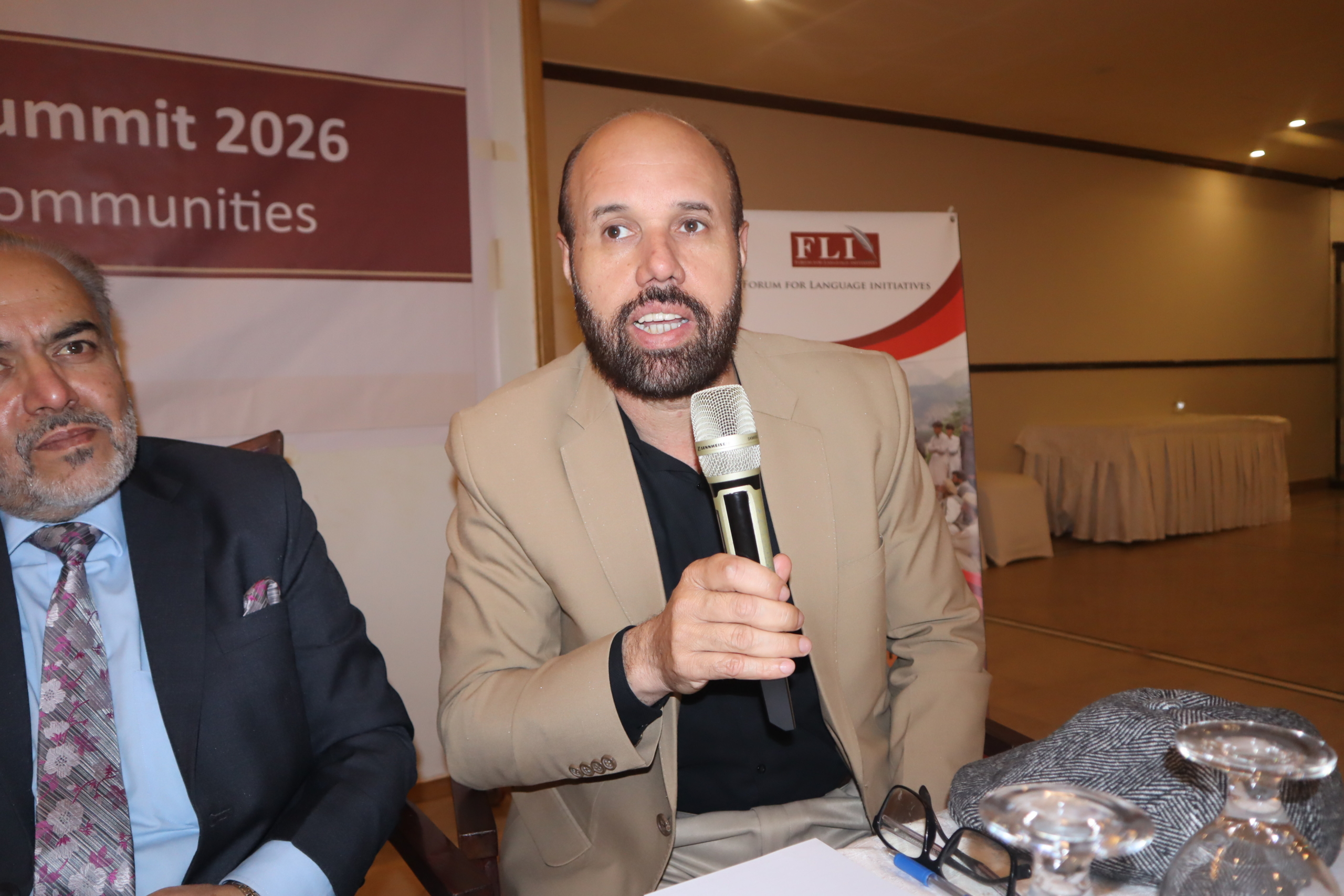
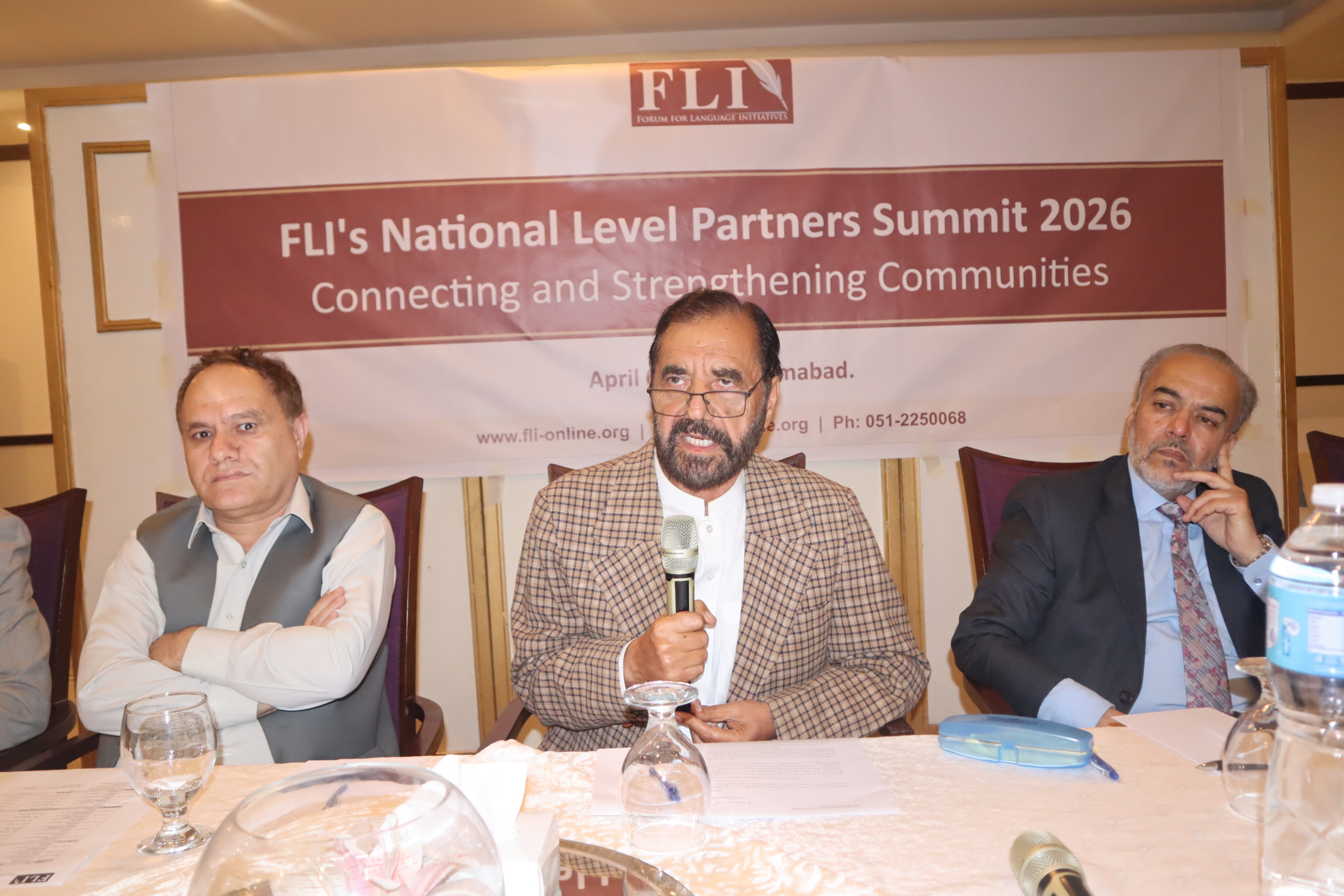
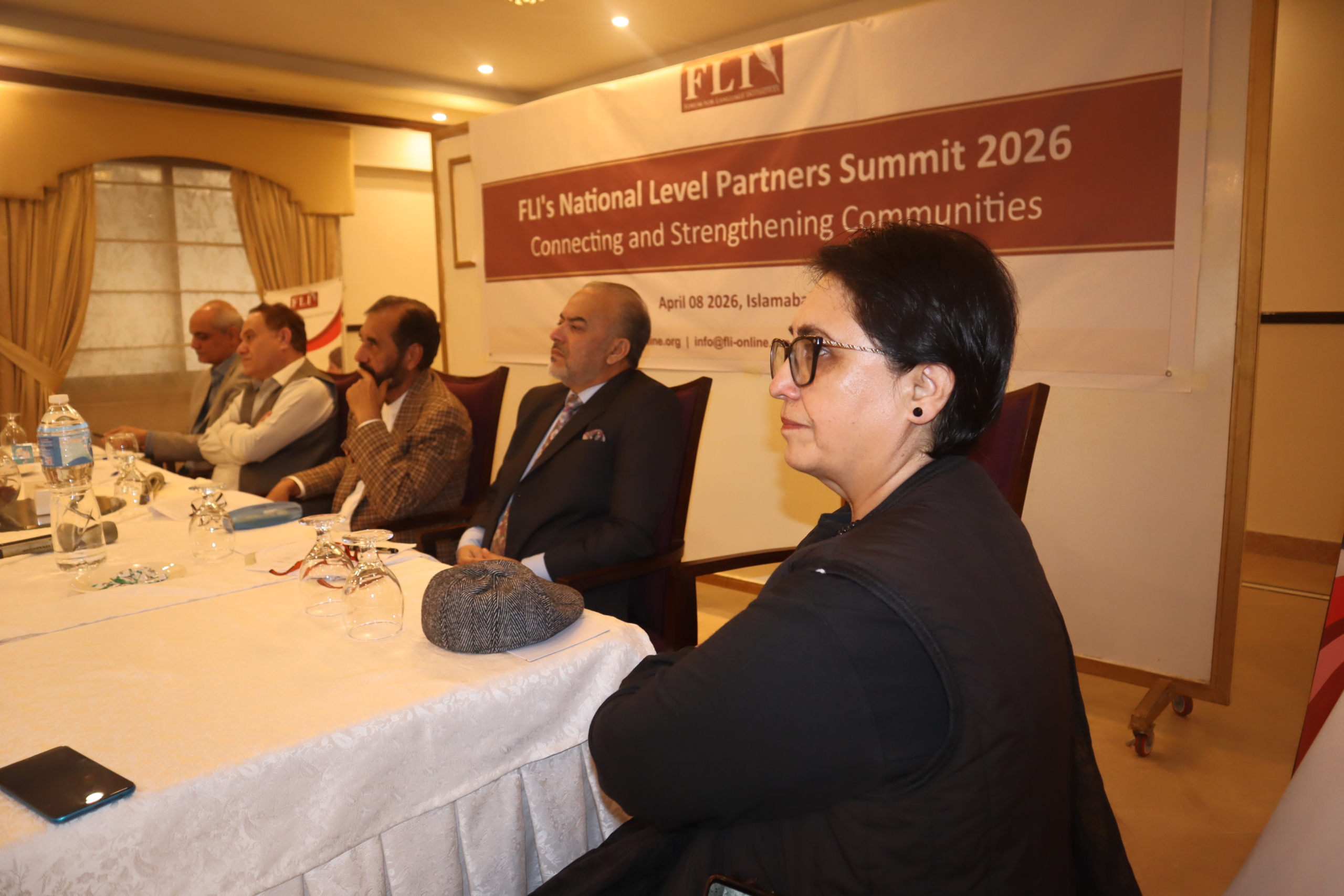
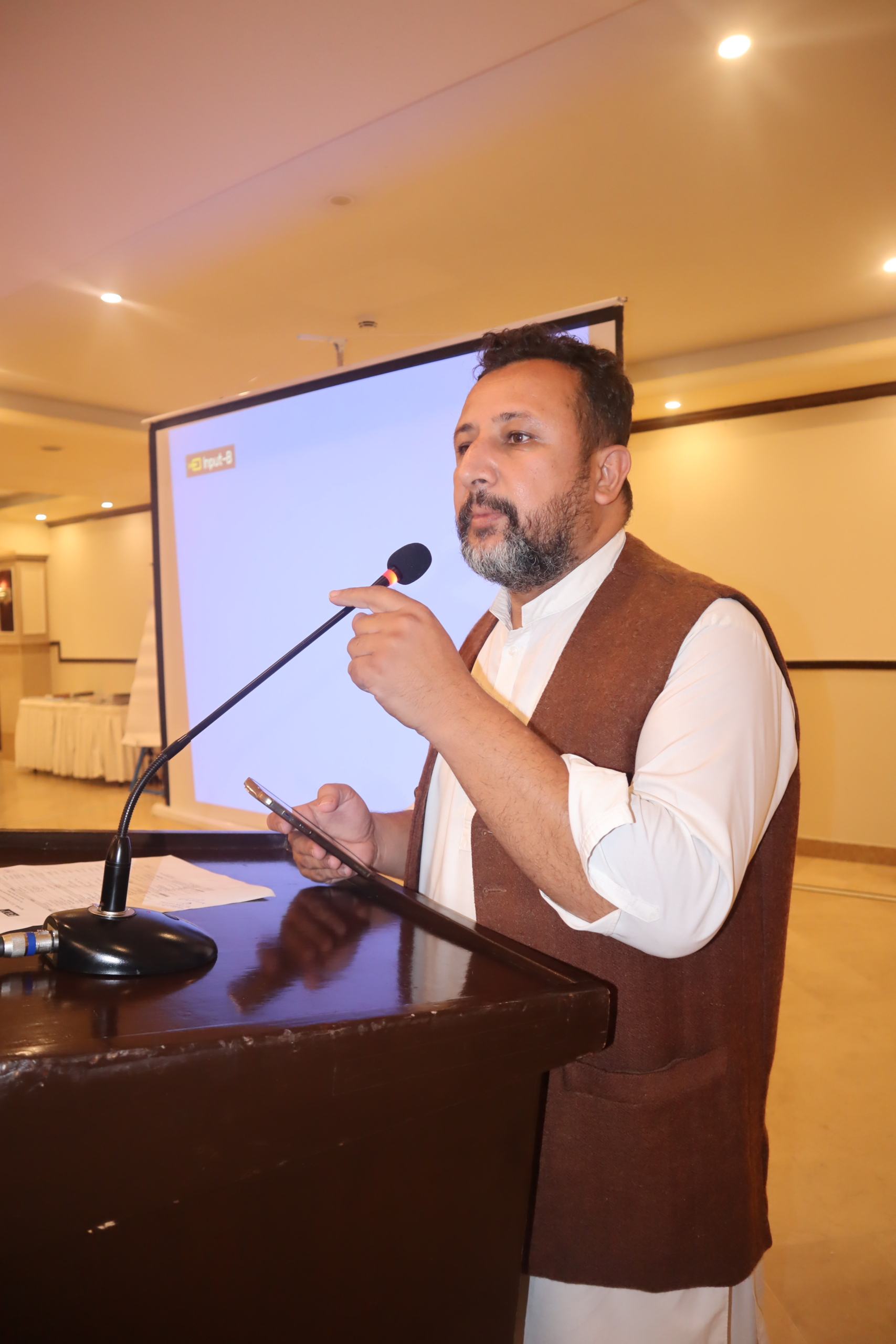
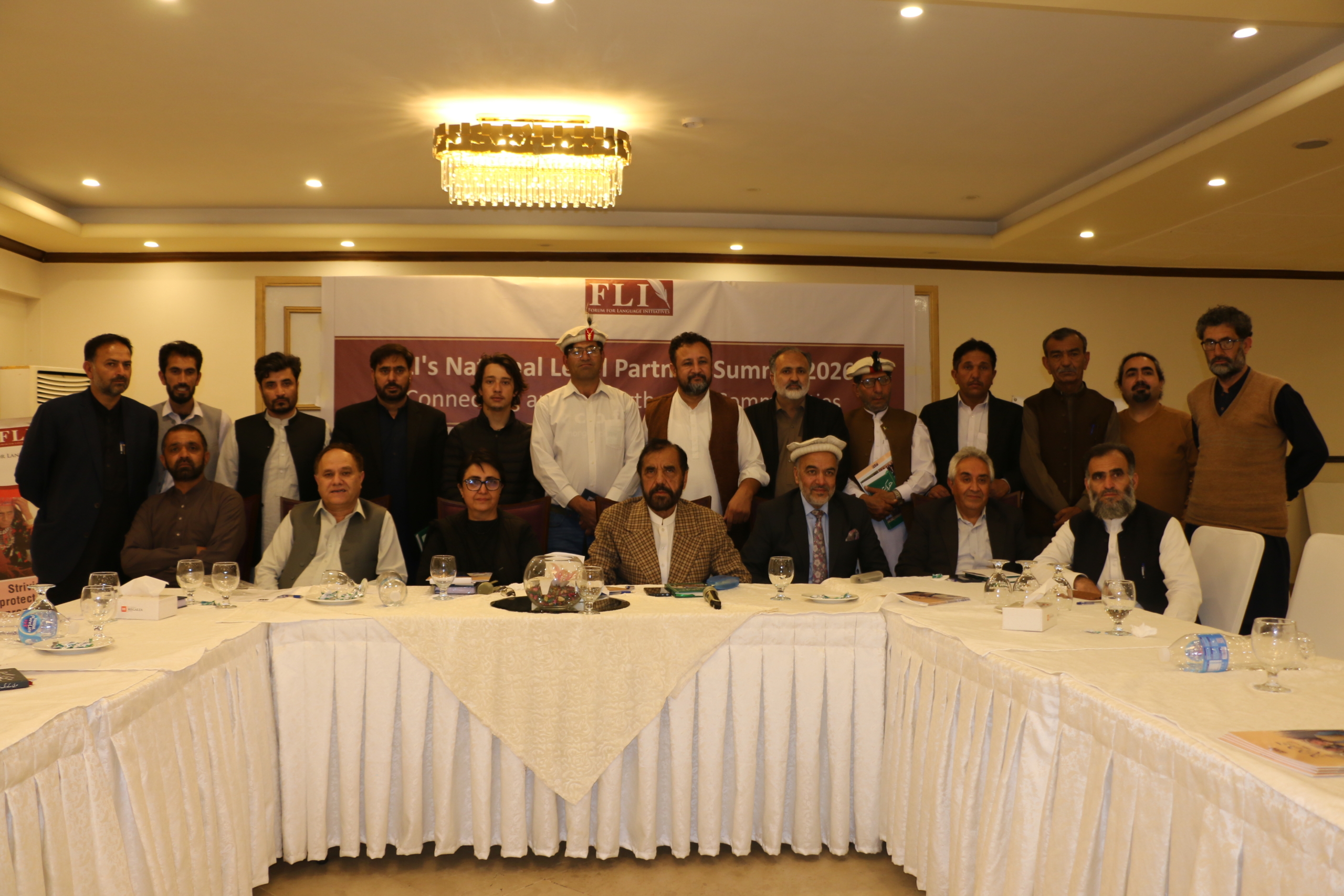
Peshawar, September 4, 2025 — The Forum for Language Initiatives (FLI) convened a partners’ meeting today in Peshawar, bringing together leaders from 14 Community-Based Organizations (CBOs) across Khyber Pakhtunkhwa. The one-day gathering served as a platform for reflection, collaboration, and renewed commitment to indigenous language preservation.
Over the past six months, these CBOs have been actively engaged in grassroots efforts to strengthen their mother tongues. The meeting spotlighted inspiring stories from the field, with Nasir Mansur of the Kateviri language community earning special praise for his work with a government school in his village. He trained children to deliver speeches in their native language during Independence Day celebrations on August 14 — a moving initiative that saw enthusiastic participation from young speakers.
Alauddin from the Yadgha language group surprised attendees with news of writers’ workshops held in both private and government schools in his region, nurturing literary expression among students. Another milestone was the first-time representation of the Mankiyali language, spoken by fewer than 500 people in Mansehra district. Aurangzeb’s presentation marked a significant step forward in visibility and advocacy for this endangered language.
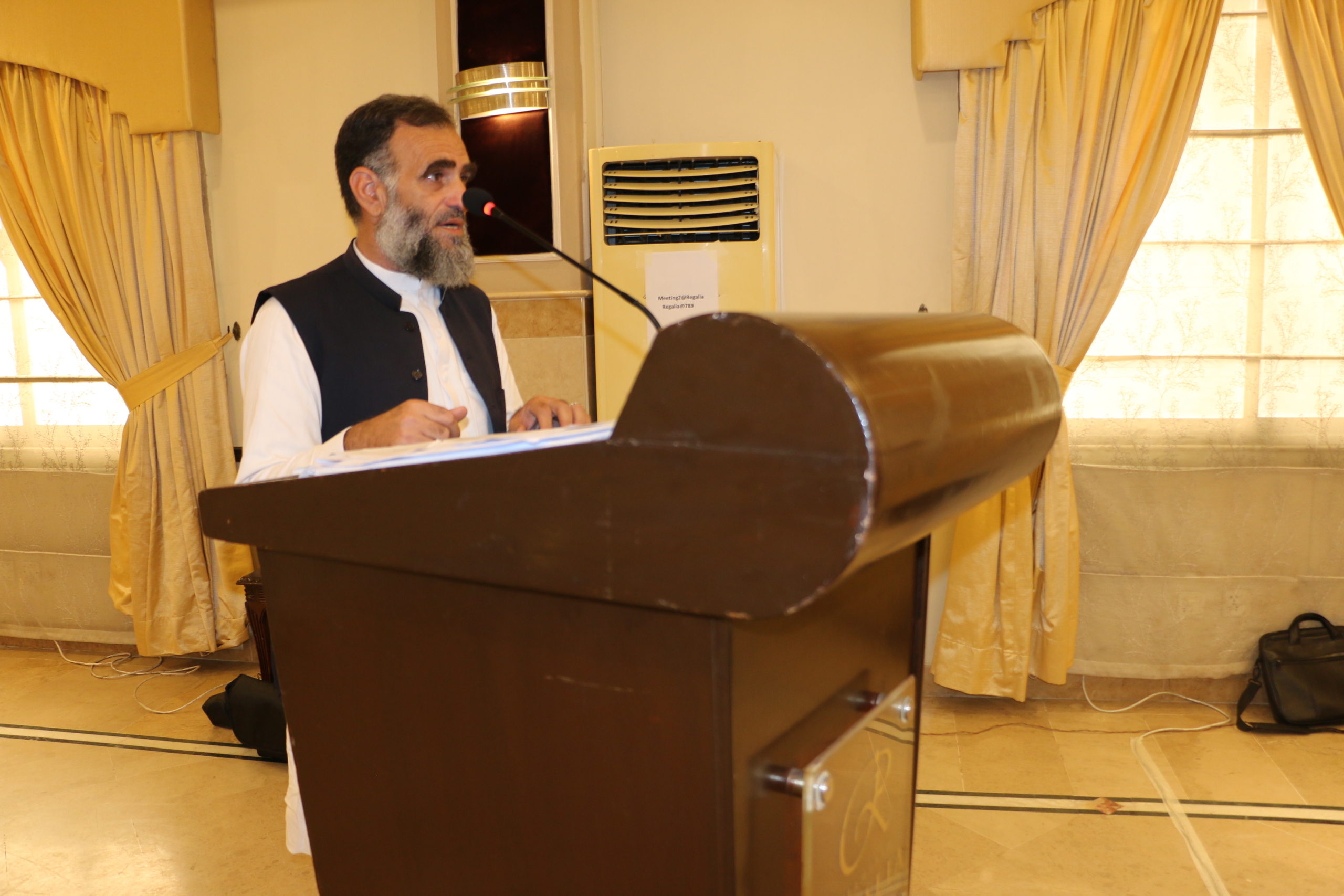
Following the presentations, FLI facilitated a session focused on promoting indigenous languages through poetry. Participants were encouraged to engage poets from their communities, recognizing the power of verse in cultural preservation and linguistic pride.
The meeting also explored strategies to expand language documentation across diverse domains, with participants offering valuable feedback and ideas. In a major development, a provincial-level regional network was formed to unify efforts across Khyber Pakhtunkhwa. A dedicated WhatsApp group was launched to foster ongoing collaboration and coordination.
In the closing resolution, participants committed to advocating for linguistic rights through their elected representatives. Regional delegations were announced to engage with members of the provincial assembly, aiming to push forward a resolution that would reinforce the government’s commitment to indigenous language support.
FLI remains steadfast in its mission to empower communities, amplify voices, and ensure that the rich linguistic heritage of northern Pakistan continues to thrive.