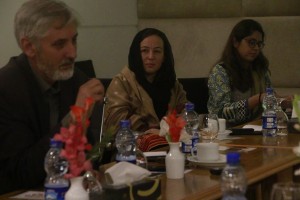
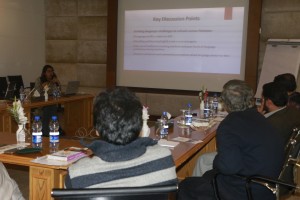
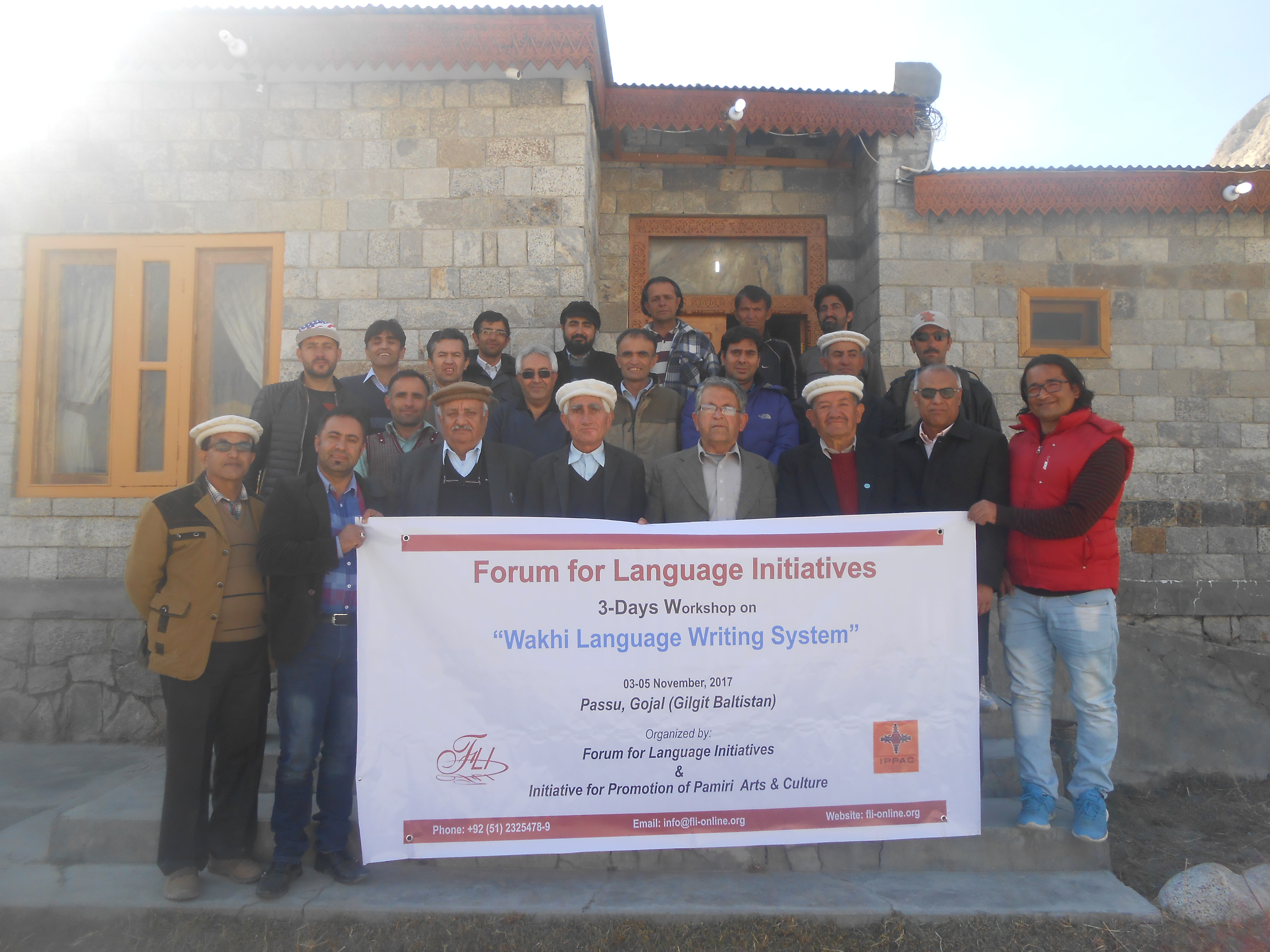
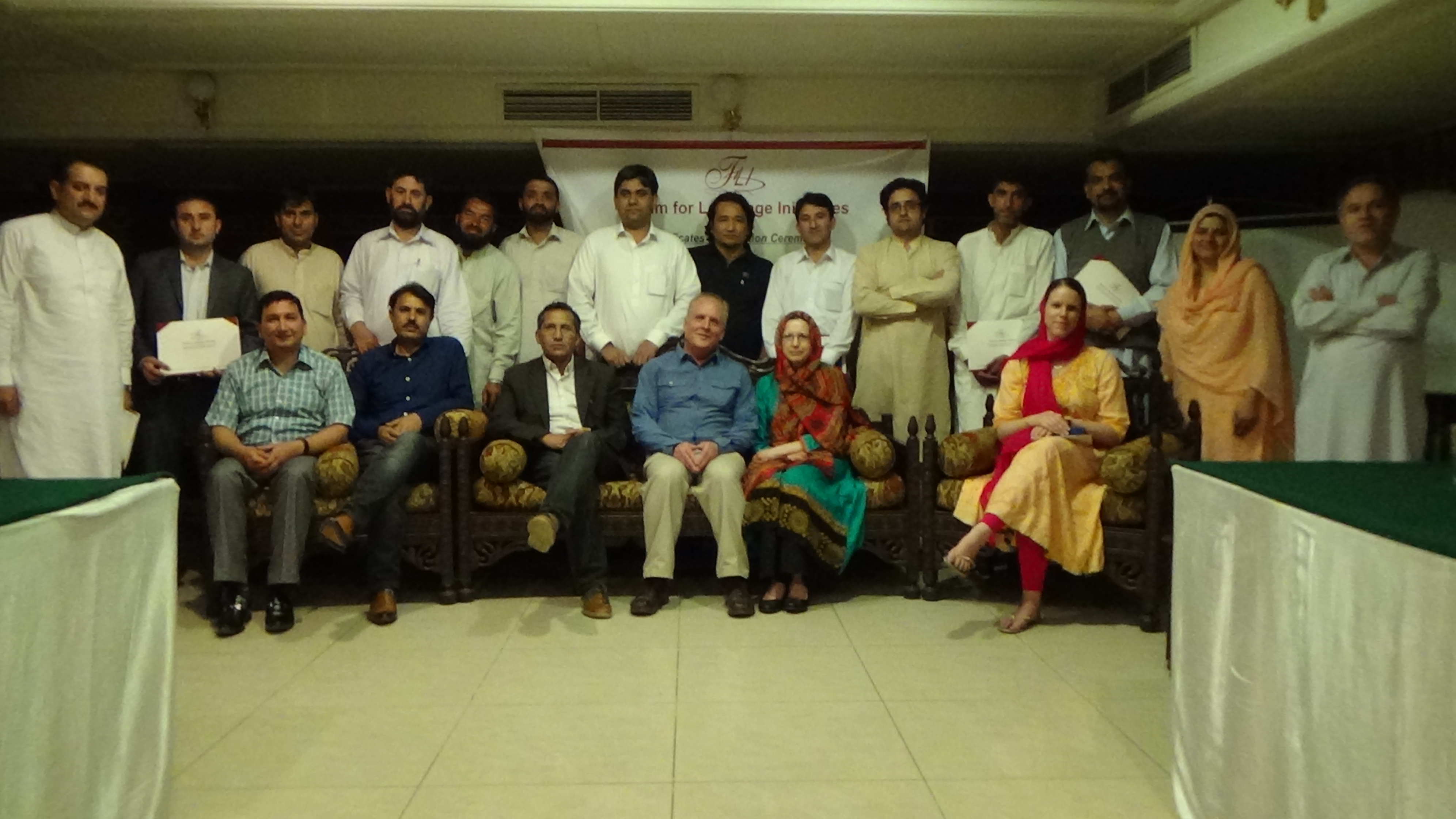
SAHE and Forum for Languag e Initiatives (FLI) collaborated to organize a roundtable discussion on above topic. The event was hosted in Peshawar and was attended by official representatives from various govt. offices, educational institutions and civil society organizations. The discussion provided an opportunity to discuss the complexities surrounding the implementation of language policy in schools across the province. The event was also attended by a political representative from the KP Assembly who was able to shed light on her party’s efforts towards the promotion and inclusion of local languages in education.
The KP Regional Languages Authority Act of 2012 was a prominent discussion point among the stakeholders who outlined its requirement for the establishment of an authority that would advise on the protection and promotion of regional languages, and suggest ways of integrating their use within the education system. The additional director of the Directorate of Curriculum and Teacher Education (DCTE) elaborated on the efforts by the department to develop curriculum in the five main languages of the region including Pashto, Hindko, Khowar, Kohistani and Seraiki. An authority was constituted for this purpose under the Act, and it provided a roadmap for the phased introduction of these languages to be taught as subjects in primary school. The authority comprised of 2 experts for each language along with relevant department officials who helped in identifying learning competencies for each language.
Advisory committee meetings with large groups of stakeholders were held for arriving at a consensus for content material in local languages. Primers in each language were developed with consensus on the alphabets, which involved speaking to poets, literary figures, community elders and other fluent speakers of the language. The primers were then introduced as part of the first phase while books for subsequent grade levels were introduced in the following phases. This pioneering effort provided a blueprint for the entire process and laid the foundation for similar efforts across all languages. However, there still remain administrative and legal bottlenecks that have caused delays in the overall process.
With respect to the work of civil society organizations in conducting pilot programs in multilingual education, representatives from FLI and Idara Baraye Taleem-o-Taraqqi (IBT) shared the ongoing efforts of their respective organizations that have been successfully facilitating small-scale programs in local languages of the north, for instance in the region of Torwali. Though parents were initially apprehensive, and student numbers dwindled during implementation, parents came around once these students were placed in English medium schools for higher primary grades, and they outperformed children that had been in an EMI system from the start. Parental attitudes towards the inclusion of local languages are improving now that some evidence for improved student outcomes has been documented. However, there is still a need to generate wider and more stringent research in this field, particularly through engaging in longitudinal studies. For convincing the various stakeholder groups, there is a need to invest in pilot programs in local mother tongue based multilingual education systems (MTB MLE).
The MPA from Chitral shared that as of now, language in education has not been an area of priority for the political party in the region (PTI). She urged for the attendees to streamline their efforts and maintain a continuity in discussions so that the language issue remains a prominent part of the education agenda. She also advised for creating clarity about the roles and responsibilities of the authority so that they can be held accountable for implementation. Attendees also suggested the MPA to take up the mandate of an inter-provincial language caucus that allows policymakers to learn from efforts across Pakistan and to consolidate a reform agenda for language policy. The central issue for all stakeholders as of now is the absence of an appropriate language policy which is a set of changing plans man. The director of the Pashto Academy informed the attendees that their academy is working towards preserving other languages as well, and is especially trying to assess where new orthographies can be developed along the lines of existing language frameworks in Pashto.
Attendees urged for the need to acknowledge that language is a political issue, and the dynamics between dominant and minority ethnic groups affect language policy. Though more than 24 languages are spoken in KP, only Pashto and Hindko have dedicated language academies that are furthering works in the language. In order to bring about reform in language policy, policymakers must be sensitive towards different language groups and divert resources equitably towards the development of languages. Secondly, teachers must be facilitated to be deployed in linguistically relevant areas where they speak the language of the community. For the most part, the geographical distribution of northern areas is such that rural areas are largely linguistically homogenous, therefore teacher deployment must leverage geographical similarities in communities and appoint relevant teachers for different communities.